IRIS 2.26"
YIRIS229
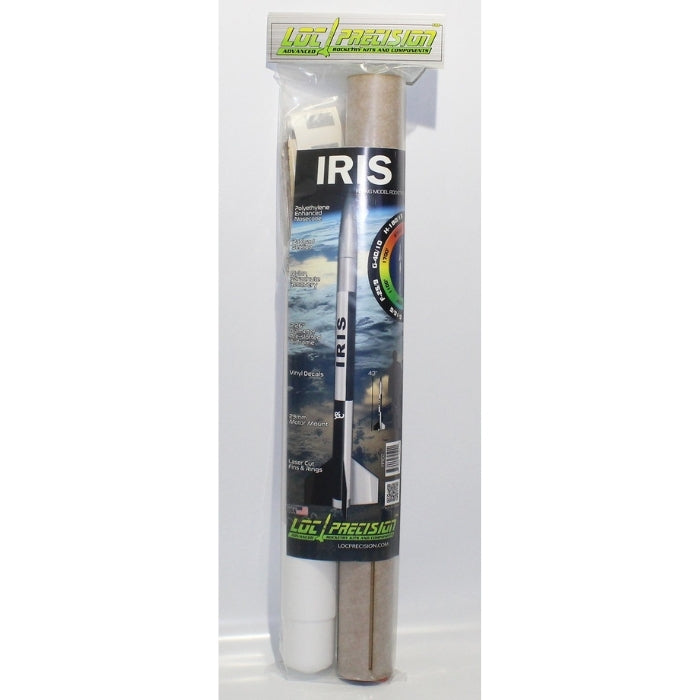
Regular price Sale price $81.51ALL LOC Precision kits include laser cut fins, rings, and slotted air-frames and polypropylene nosecones.
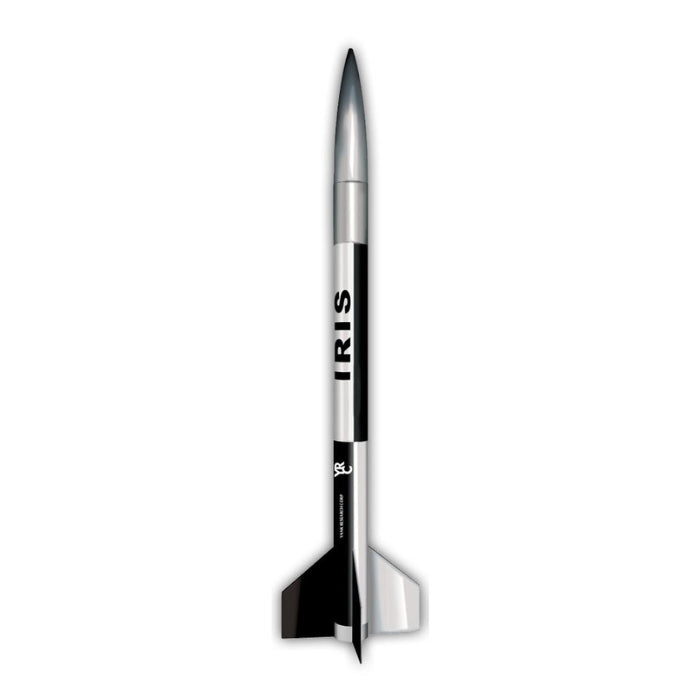
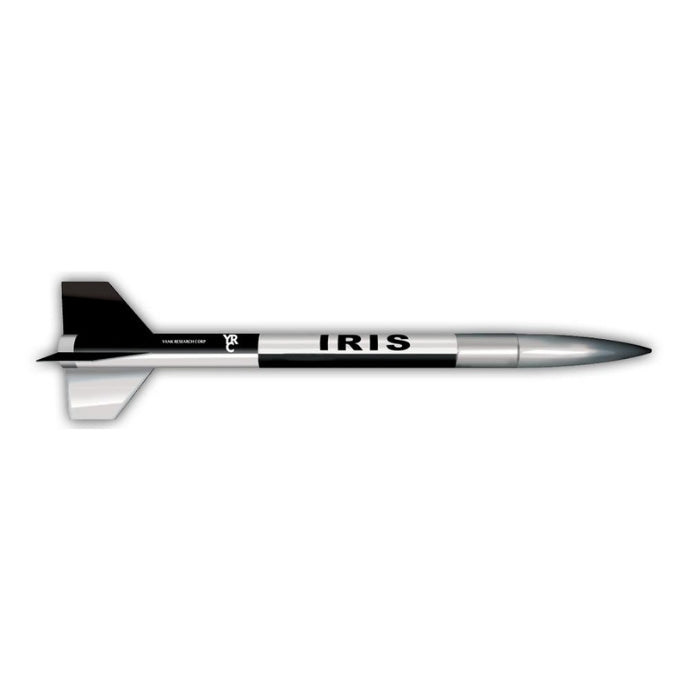
One of the ADVANCED SERIES of kits, which feature factory pre-slotted airframe and through-the-wall fin construction, the IRIS is our sport scale version of the famous IRIS rocket. Weighing in at 22 oz. and a height of 43" it features 24" slotted booster, 10" payload section for possible dual deployment, a 28" Rip-Stop Nylon Parachute, Fire blanket, Kevlar Shock Cord and a vinyl decal. The 29mm motor mount is perfect for E through G motors and the rugged airframe can take I power if you can handle it!
DESCRIPTION
Complexity: 29mm Intermediate – 38MM Advanced
Diameter: 2.26″
Height: 43″
Weight: 23oz
Motor Mount: 38MM (Performance Series) or 29MM (Advanced Series)
Parachute Size: 28″ Ripstop Nylon (Performance Series) 24" Parachute (Adbanced Series)
Shock Cord Type: 12′ 3/16" Tubular Nylon (Performance Series) 9' Tubular (Advanced Series)
Shock Cord Mount: Eye Bolt SCM1
Fin Thickness: 1/8″
Ring Thickness: 1/4″(Performance Series) 1/8" (Advanced Series)
Instructions: Yes
Vinyl Decal: Yes, logo decal only

YIRIS2
- 29mm motor mount Performance Series: The IRIS is our sport scale version of the famous IRIS Sounding rocket The 29mm motor mount is perfect for F and G motors and the rugged airframe can take I power if you can handle it. Parachute Recovery.
- 38mm motor mount Performance Series: With a 38mmt this is our performance version of the kit which includes Nylon recovery and loops sewn in. Quick links and eye bolts for secure recovery connections. Also ready to accept the new 3″ Terrier Booster.
Iris 2 / 29mm - just completed my Mid-Power cert flying this with an economax F67W with 6sec ejection delay and the flight was smooth and successful! I've done a lot of Low-Power kits including the Loc 1" IRIS. This 2.2" IRIS is a great kit and there are LOTS of videos out there about ways to build it. I built it with an extra centering ring and with all epoxy, and building the fin can outside the body tube then cutting the body tube at the bottom of the fin slots to insert the pre-built fin can. I found it annoying that Loc's own documentation and video's refer to the 38mm version, which has a few differences. I found it a bit uphill since the differences from low-power are not clearly summed up in one place, eg: that mid power/high power don't use engine blocks but the engine retainer is dual purpose, stopping the engine falling down out of the tube and pushing up into the body. I strongly recommend beginners using this kit also buy an engine retainer (loc or other brand), launch lugs (not included in kit), swivels (eg: Nickel-Plated 6/0 Swivel, 600# test) and optionally a spare pack of centering rings, a spare joiner tube, nylon rivets and an electronic payload bay 2.14" (54mm). I found the rocksim engine graphic on the loc product page to be misleading - always run RockSim yourself to check. The F20W motor is marginally successful in RockSim because the velocity at launch guide departure is 23m/h, and any extra weight (eg: expoxy, extra centering ring, payload) will put you below 20m/h minimum. I intend to use this same build for Cert 1 with an H motor in a few months.
Another GREAT LOC Precision kit! I added this to my growing fleet of LOC rockets.
ADD motor retention and make sure you adjust CR placements accordingly.
Fit and finish of all of the parts was really good, just a little light sanding to remove laser char. It went together very quickly, and flew well. LOC advertises fast decent to keep drift to a minimum. With those big fins, if hard surfaces are in your recovery area think about upsizing the parachute.
All said this was a good project, and now on to more flights, and the next build.


